
Memento Mori

Memento mori is Latin for "remember that you are mortal." It serves as a reminder of the transient nature of earthly life and has a long history in still life painting, rooted in Christian theology.
The idea was to encourage people to live purposefully and focus on what truly matters. If you’ve ever wandered a museum and seen paintings that include a snuffed candle with a ribbon of smoke, wilting flowers, or an hourglass—these are all common mortality motifs.
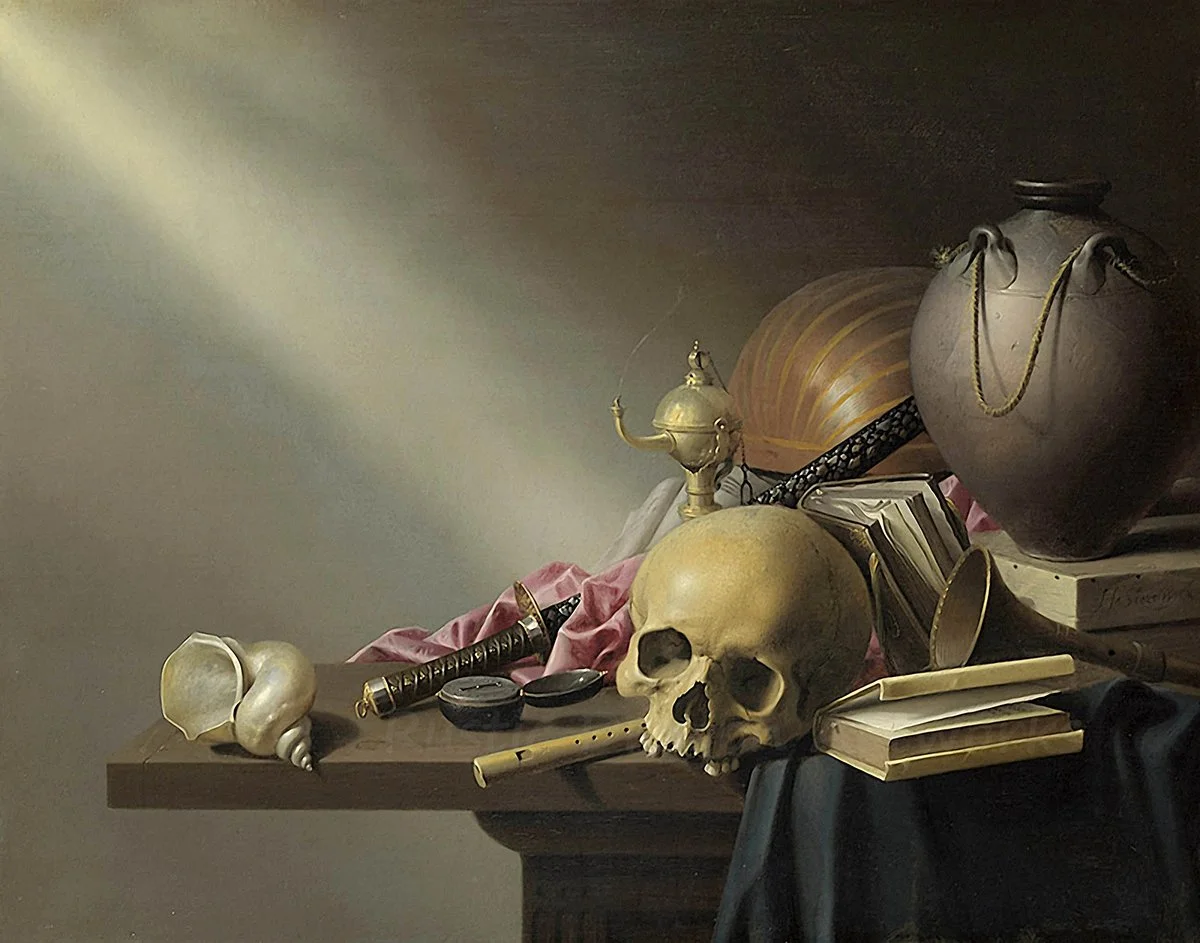
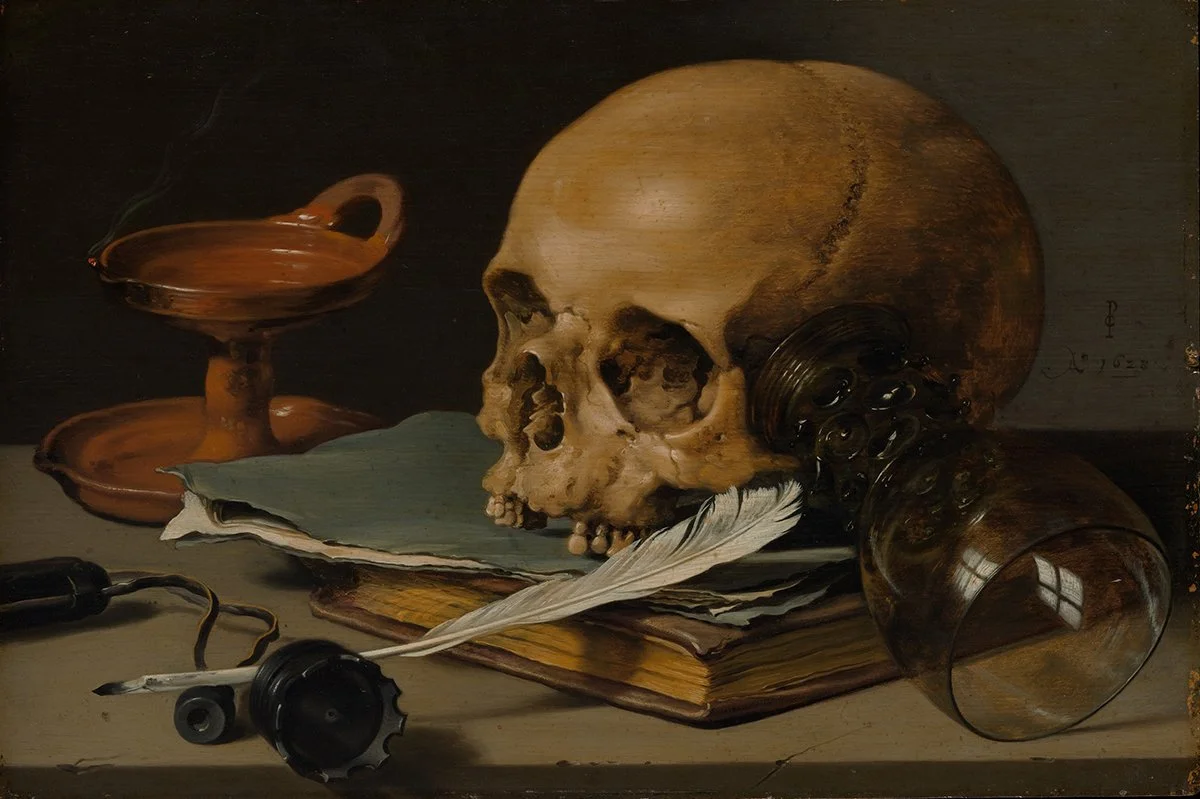
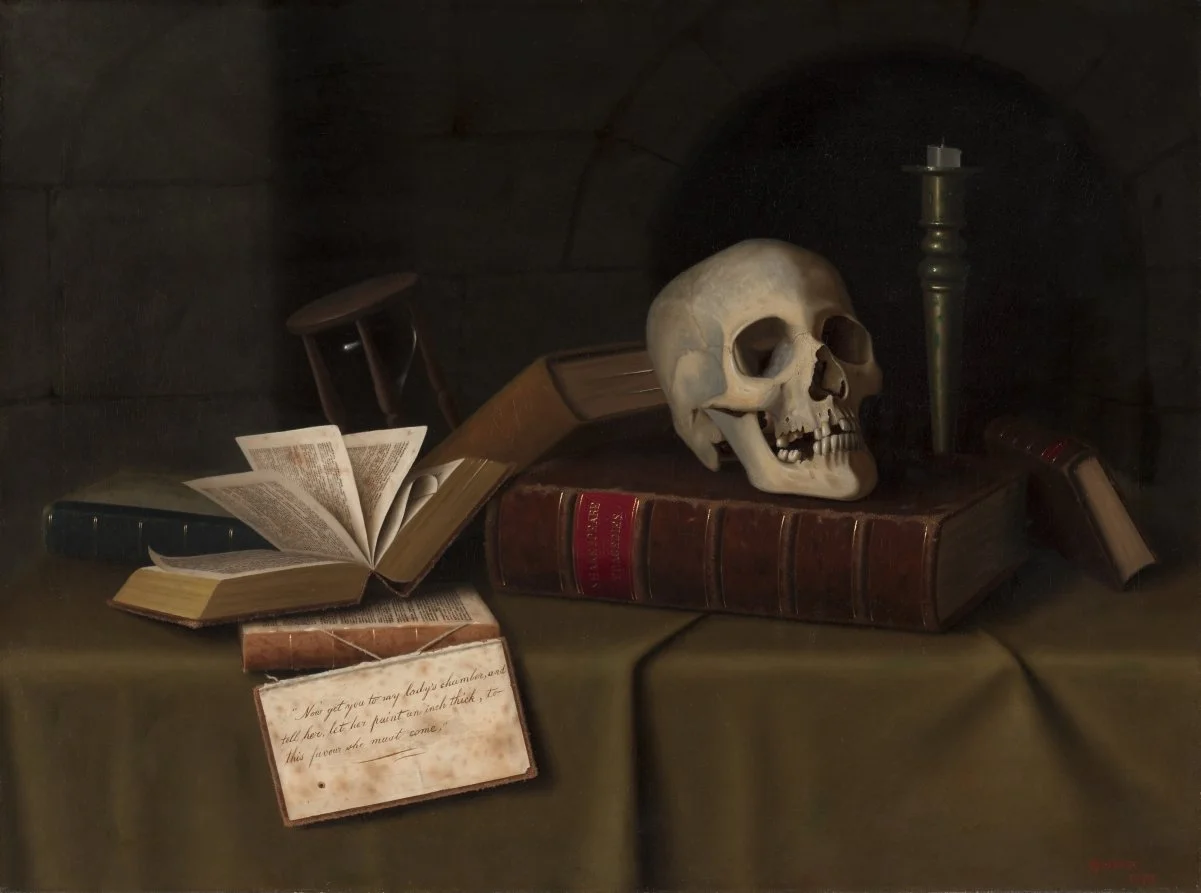
The most familiar symbol, however, is a skull.
In Memento Mori, I’ve played with that tradition in a more unexpected way. Seen from above, the typewriter takes on the appearance of a stylized skull—a modern, mechanical nod to this artistic trope. It’s sort of a Pixar-Steampunk-Still Life mashup.

This painting will be on view at the Reading Public Museum through January 3, as part of the 113th Annual Exhibition of Allied Artists of America. If you are in the area, it is well worth a visit. Also check out the Rockwell/Wyeth: Icons of Americana exhibit on display at the same time.
Historical paintings in public domain:
Memento Mori, "To This Favour" 1879
William Michael Harnett (American, 1848–1892)
Still Life with a Skull and a Writing Quill 1628
Pieter Claaesz (Dutch, 1597–1660)
Still Life: An Allegory of the Vanities of Human Life 1640
Harmen Steenwyck (Dutch, 1612-1656)